
How to Worship at Erawan Shrine Bangkok: What to Pray For, All Four Faces, Offerings & How to Fulfill a Vow
In the heart of Bangkok’s Ratchaprasong district stands one of the city’s most famous spiritual landmarks — the Erawan Shrine, also known to many international visitors as the Four-Faced Brahma Shrine. Located near Grand Hyatt Erawan and CentralWorld, the shrine attracts both Thai worshippers and travelers from around the world.
Visitors commonly come to pray for career success, love, wealth, health, and good fortune. One of the shrine’s most distinctive features is the four-faced image of Phra Phrom. According to popular local practice, worshippers visit all four faces, moving clockwise around the shrine.
For travelers searching for How to Worship at Erawan Shrine, Erawan Shrine Bangkok, Four-Faced Buddha Bangkok, or how to fulfill a vow at Erawan Shrine, this guide covers the essentials.
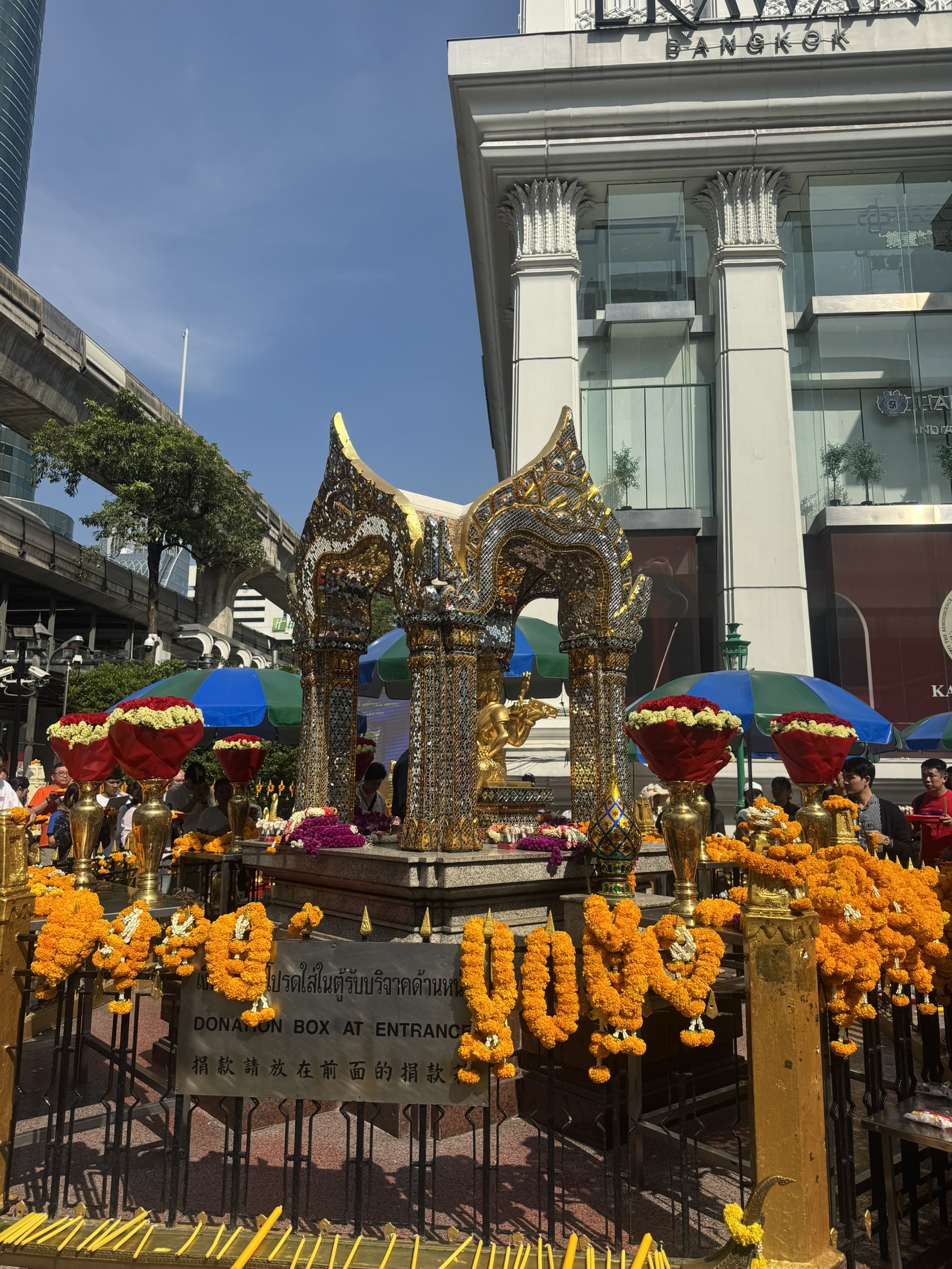
Who Is the Deity at Erawan Shrine?
The deity enshrined here is Phra Phrom, the Thai representation of Brahma, the Hindu deity traditionally associated with creation.
The Erawan Shrine was established in 1956 during the construction of the former Erawan Hotel. After the project encountered difficulties, a shrine dedicated to Brahma was erected for auspiciousness. Over time, it became one of Bangkok’s most recognized places of worship.
What Can You Pray for at Erawan Shrine?
The four faces of Phra Phrom face four directions and are popularly interpreted as symbolizing blessings in different areas of life.
According to a widely followed local belief, wishes are often associated with the four faces as follows:
- First Face: Career, education, reputation, and success
- Second Face: Love, relationships, and family
- Third Face: Wealth, business, investment, and finances
- Fourth Face: Health, safety, and family well-being
These associations are part of popular worship traditions rather than strict religious rules. Visitors may pray for whatever is personally meaningful to them.
How to Worship All Four Faces
For first-time visitors, a common practice is to worship all four faces rather than stopping after the first one.
Begin at the front face and then proceed clockwise until you have worshipped all four sides.
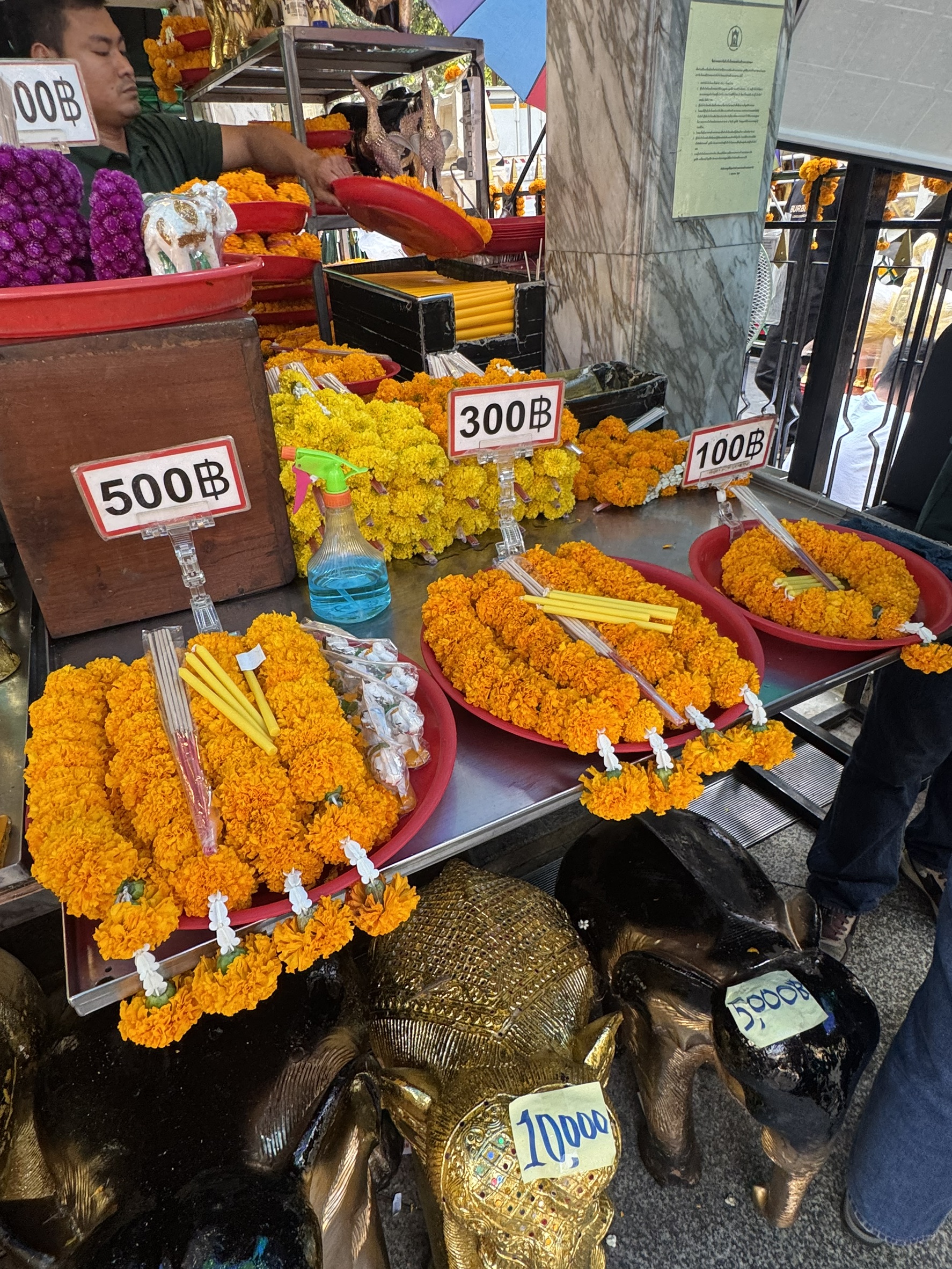
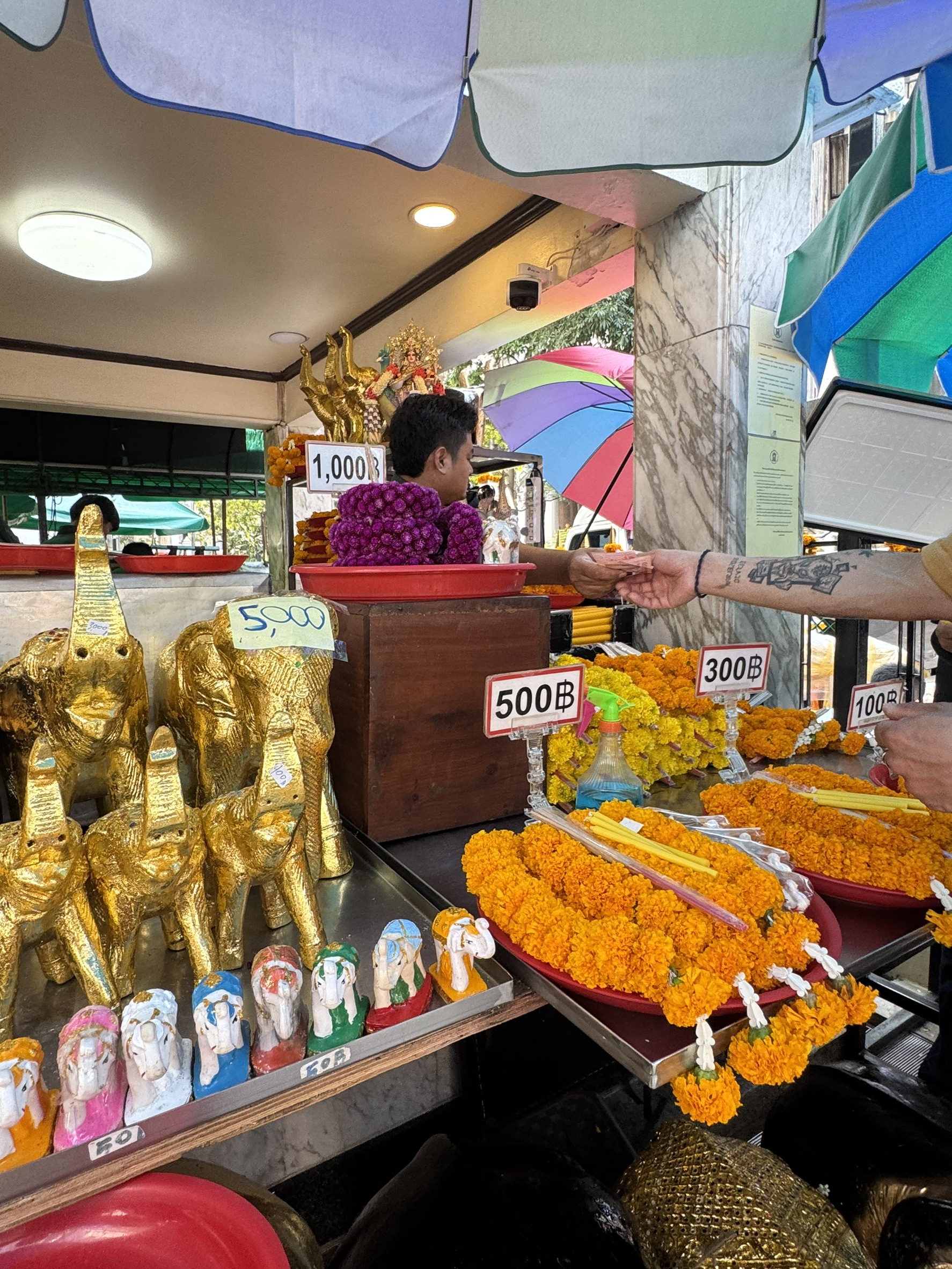
A traditional worship set for all four faces generally consists of 12 incense sticks, 4 candles, and 4 flower garlands. At each face, offer 3 incense sticks, 1 candle, and 1 garland.
Face 1 → Face 2 → Face 3 → Face 4, moving clockwise
After completing all four faces, take a moment to express gratitude before leaving.
Rules concerning incense and candles may change due to air-quality or safety measures, so always follow the instructions displayed at the shrine on the day of your visit.
What to Offer at Erawan Shrine
Common offerings include flower garlands, incense, and candles. Some worshippers also offer fruits, fragrant flowers, or wooden elephant figures according to personal beliefs.
Offerings do not need to be expensive. Sincerity, respectful behavior, and consideration for the sacred space are more important.
If purchasing offerings, use designated vendors around the shrine and check prices before purchasing.
How to Make a Wish
Before praying, calm your mind and state your name before clearly expressing your wish.
For career-related wishes, for example, you might pray for professional advancement, a new business opportunity, or success with a specific project. For love, you may pray for a healthy and stable relationship.
There is no need to make many wishes at once. If you promise to return with a particular offering after your wish comes true, choose something you can realistically fulfill.
Prayer and vow-making are matters of personal faith and do not guarantee a particular outcome.
How to Fulfill a Vow at Erawan Shrine
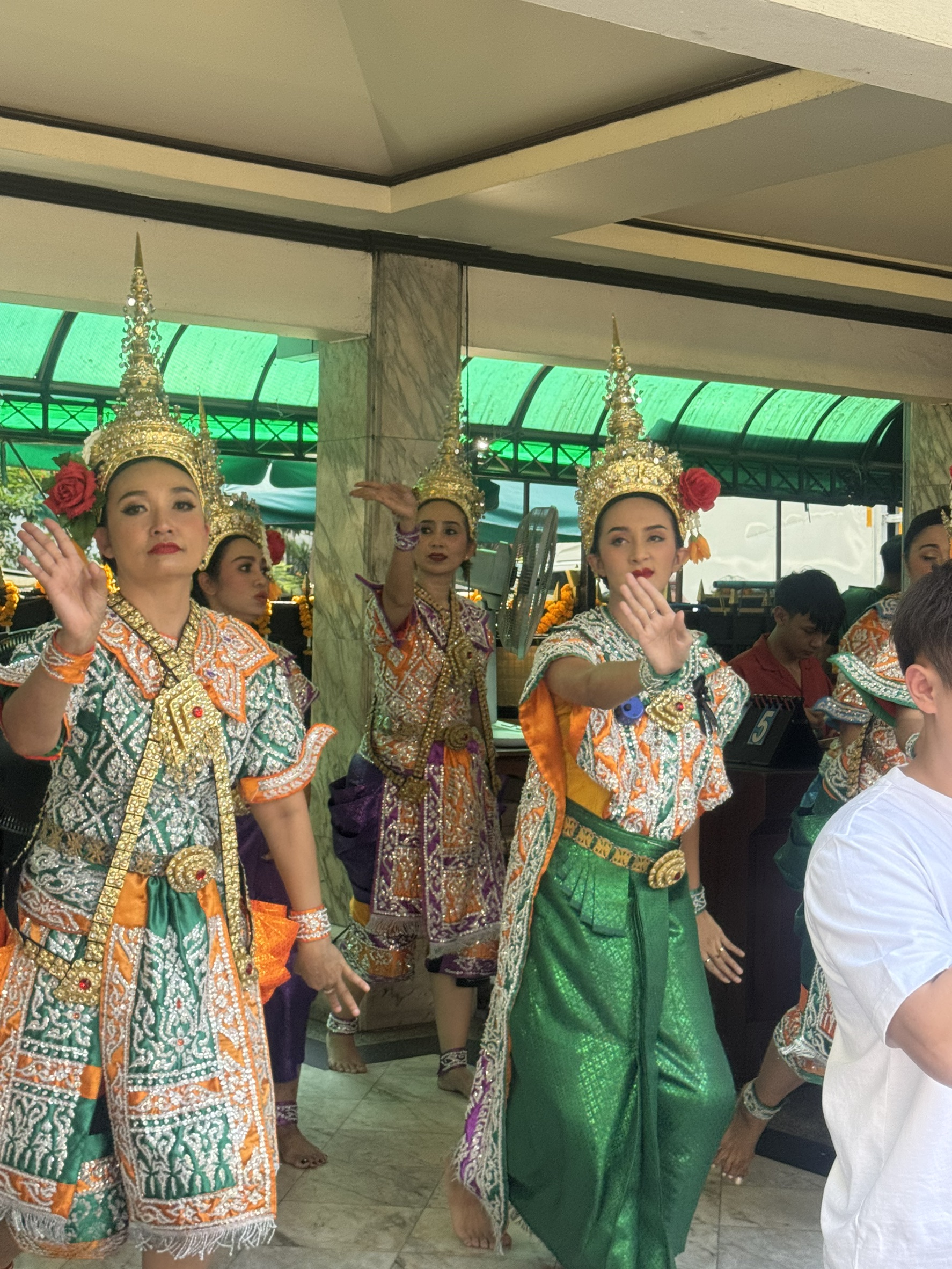
One of the most recognizable sights at Erawan Shrine is the group of traditional Thai dancers performing beside the shrine.
When worshippers believe their prayers have been answered, many return to express gratitude and fulfill their vows. A popular practice is to arrange a traditional Thai dance performance in front of Phra Phrom.
If you promised a particular offering or dance when making your wish, it is customary to return and fulfill that promise.
Some visitors also return with flower garlands, fruits, or other offerings as an expression of gratitude.
Erawan Shrine Opening Hours
The shrine is generally open daily from 6:00 AM to 10:00 PM, with no admission fee.
Morning visits tend to offer a calmer atmosphere, while the evening can be livelier and may provide more opportunities to see traditional Thai dance offerings.
Opening arrangements can change, so checking the latest information before visiting is recommended.
How to Get to Erawan Shrine
Erawan Shrine is located at Ratchaprasong Intersection on Ratchadamri Road, near Grand Hyatt Erawan, CentralWorld, and Gaysorn Village.
One of the easiest options for international visitors is to take the BTS Skytrain to Chit Lom Station and walk toward Ratchaprasong Intersection.
Its central location makes it easy to combine with other attractions:
Erawan Shrine → CentralWorld → Trimurti Shrine → Dinner → Bangkok Rooftop Bar
Private Bangkok Spiritual Tour
For international visitors, exploring Bangkok’s shrines with a guide can provide deeper insight into the history, symbolism, and local worship customs of each site.
A private Bangkok Spiritual Tour could include:
Erawan Shrine → Trimurti Shrine → Ganesha Shrine → Wat Pho → Wat Arun
For travelers seeking a more private experience, Nano VIP can arrange a private chauffeur service and multilingual Private Tour Guide, with a customized itinerary covering hotel pickup, shrines, temples, restaurants, shopping destinations, and return transportation.
Conclusion
The Erawan Shrine in Bangkok is more than a famous place to make wishes. It is also a fascinating expression of spiritual belief woven into the everyday life of modern Bangkok.
For first-time visitors, the simplest way to remember the worship tradition is: start at the front face, move clockwise, and worship all four faces.
Visitors commonly pray for career success, love, finances, health, and good fortune. If a wish is believed to have been fulfilled, returning with flower garlands or arranging a traditional Thai dance offering is one of the shrine’s most distinctive traditions.